

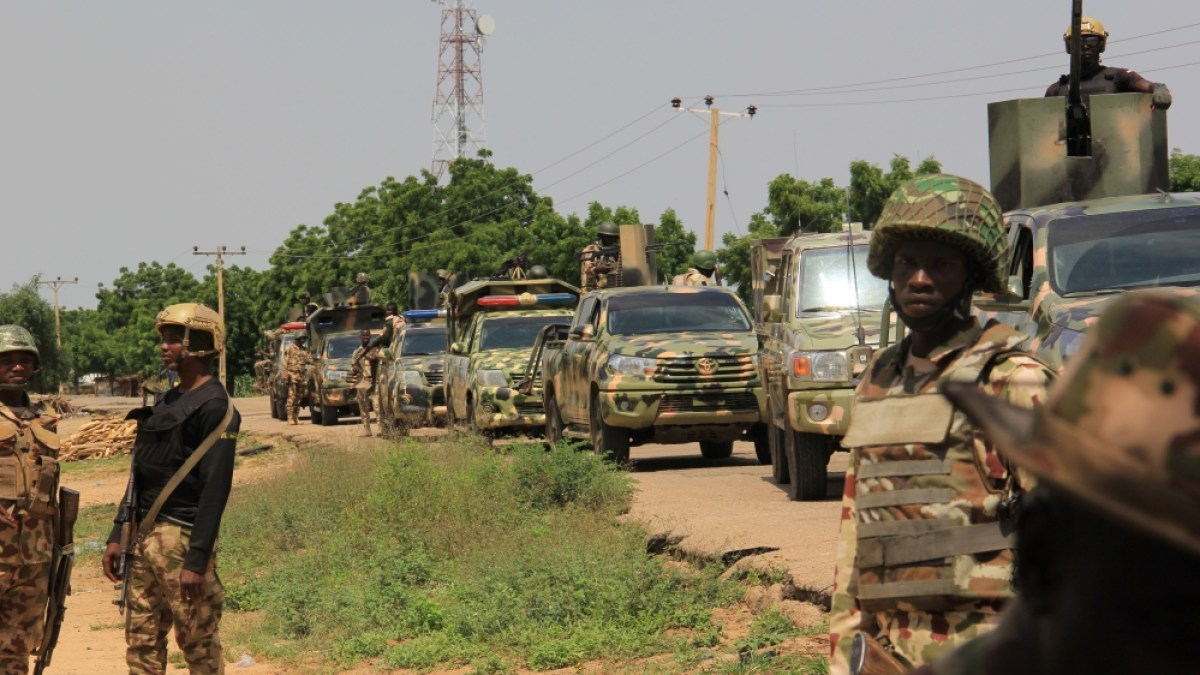
Abuja, Nigeria – The killing of Abu-Bilal al-Minuki, the second-in-command of ISIL (ISIS), by United States and Nigerian forces marks a notable achievement for “counterterrorism”. Yet for analysts observing the Lake Chad Basin, it highlights how persistent and complex insecurity in the region has become.
Al-Minuki, a Nigerian national from Borno State, was operating out of a compound near Lake Chad, at the centre of one of the world’s most active armed group theatres.
Recommended Stories
list of 1 itemend of list
His choice of northeastern Nigeria as a base underscores the conditions driving a renewed surge of violence by both the ISIL affiliate in West Africa Province (ISWAP) and its rival, Jama’at Ahl al-Sunna li al-Da’wa wa al-Jihad (JAS), more widely known as Boko Haram.
Perhaps equally significant is the parallel resurgence of Boko Haram, which quietly rebuilt itself while security agencies primarily focused on the more dominant ISWAP.
“While regional forces focused on countering ISWAP’s threats, partly due to the group’s advanced drone capabilities, Boko Haram appears to have taken advantage of the relative attention on its rival to regroup,” Nimi Princewill, a security expert in the Sahel, told Al Jazeera. “This, in turn, seems to have enabled both factions to rebuild strength and carry out further attacks in the area.”
Borders, weak governance, and violence spike
Beyond the immediate tactical manoeuvre of Boko Haram and ISWAP, the resurgence of violence in the Lake Chad Basin also underscores the broader regional challenges of coordination and intelligence-sharing among affected states.
“Although Mali and Nigeria do not share a common border, the large expanse of the Sahel that straddles them has several porous borders that allow the movement of jihadi elements and their weapons. The situation in Mali has made the Sahel a more permissive environment for armed groups, amplifying risks for Nigeria through spillover dynamics,” Kabir Amadu, managing director of Beacon Security and Intelligence Limited in Nigeria, told Al Jazeera.
Meanwhile, efforts by Nigeria, Cameroon, Chad, and Niger to harmonise military operations are frequently hampered by logistical bottlenecks, differing command structures, and uneven resource allocation, allowing armed groups to exploit gaps along porous borders.
Local communities, on the other hand, face the dual pressures of insecurity and humanitarian deprivation, often relying on informal networks for protection and sustenance, which can inadvertently provide concealment or mobility corridors for armed rebels. Humanitarian agencies report that civilians are increasingly caught in cycles of displacement and forced recruitment, while regional security forums struggle to implement preventative measures that go beyond episodic military interventions.
In some areas, fear, mistrust, and weakened traditional authority structures may make communities more vulnerable to coercion or influence by armed groups. These social pressures can create conditions that Boko Haram and ISWAP may be able to exploit.
Economic factors also seem to play a notable role in the resurgence of both groups. Control of the Lake Chad islands could provide authority over taxation routes, smuggling corridors, and resource extraction, turning the islands into potentially lucrative areas of competition that extend beyond purely ideological motives.
Violence mechanics
This combination of armed activity and criminal enterprise also appears to support how the groups sustain themselves. Boko Haram’s mix of ideological and criminal operations, including robbery and kidnapping, may help fund its activities while attracting disaffected youth. Recruitment seems influenced by the region’s fragile socioeconomic conditions, including high poverty and unemployment, rather than ideology alone.
The shortcomings of reintegration programmes are also considered to contribute to the problem, with former combatants rejoining Boko Haram after facing limited life prospects. ISS research found that former ISWAP members, who would face execution for deserting their group, were joining Boko Haram’s Ghazwah wing in Borno, notorious for robbery and ransom operations.
In addition to financial and operational factors, the groups exploit gaps in local governance and security presence to consolidate influence. Remote communities often experience inconsistent law enforcement, limited state services, and weak administrative oversight, creating spaces where armed groups can operate with relative impunity.
“ISWAP and Boko Haram have become active again in the Lake Chad Basin for three main reasons: their resilience and ability to adapt to the evolving tactics of the Nigerian armed forces; the lucrative economy of violence that sustains their funding and manpower; and the Nigerian state’s limited ability to establish a legitimate, lasting presence in the region that could undermine their credibility,” Chris Ogunmodede, a Nigerian political analyst, told Al Jazeera.
Beyond military reach
Many of the factors driving armed attacks in the Lake Chad Basin are unlikely to be solved by military operations alone. The conditions that give ISWAP and Boko Haram their recruitment base, logistical support, and social legitimacy in some communities can be traced to decades of poverty, displacement, governance gaps, and political exclusion.
Data from the UN Office for the Coordination of Humanitarian Affairs (OCHA) shows the region hosts 2.9 million internally displaced people, including 2.3 million in Nigeria. Violence has forced the closure of 1,827 schools across the Lake Chad Basin, while humanitarian actors received just 19 percent of the funding required for 2025.
“ISWAP and Boko Haram’s recent resurgence reflects not simply a military setback, but a deepening governance vacuum across the Lake Chad Basin,” Abiola Sadiq, a security consultant, told Al Jazeera.
The Lake Chad Basin continues to face overlapping crises: millions remain displaced, schools are closed, and humanitarian aid is insufficient. Armed groups exploit geographic and administrative gaps to expand operations, while regional security cooperation struggles to keep pace with their adaptability.
“While the reported killing of ISIL leader Abu-Bilal al-Minuki may temporarily disrupt command structures, it is also likely to trigger retaliatory violence as rival jihadist factions compete for relevance, legitimacy, and territorial influence,” said Sadiq.
In the weeks following the strike, intelligence reports recorded a surge in small-scale attacks and cross-border raids, indicating that operational fragmentation has not diminished the groups’ capacity to coordinate assaults. Civilians continue to face restricted movement and elevated risks of recruitment, extortion, and displacement.
“With Nigeria’s 2027 general elections approaching, these groups are highly likely to intensify their operations, potentially extending attacks beyond their traditional strongholds in the Lake Chad Basin and northeastern Nigeria,” said Sadiq.
